Choosing a school for your child in the Dallas-Fort Worth area usually comes down to a few hard questions. Can you afford private tuition. Will a public school give your child the academic foundation they need. Does the school respect your family’s faith and values, or treat them as an afterthought. Most parents weighing these options eventually come across American Leadership Academy, a K-12 school network built specifically to combine strong academics with Islamic values, and they want to know how it actually compares to the public and private schools nearby. This guide breaks down the real differences between public, private, and Islamic schools in DFW so you can make a decision based on facts, not guesswork.
What Sets Public, Private, and Islamic Schools Apart
Public schools are funded and overseen by the state, follow a fixed curriculum, and are free to attend. Private schools charge tuition in exchange for more control over curriculum, class size, and often a religious or philosophical focus. Islamic schools are a category of private school that combine state-approved academics with Quran memorization, Islamic studies, and Arabic language instruction, giving Muslim families a way to raise academically strong kids without separating faith from daily learning.
Public Schools in the DFW Area
Public schools remain the default choice for most families, and there’s a reason for that: they’re free, they’re everywhere, and they don’t require an application process. A child living in Plano, Allen, or Frisco gets assigned to a school based on their address, and that’s usually the end of the decision.
But “free” doesn’t mean cost-free. Parents still pay for supplies, uniforms in some districts, extracurricular fees, and field trips that add up over a school year. Academically, public schools follow the Texas state curriculum, which means standardized testing drives a lot of classroom time, sometimes at the expense of deeper subject exploration. Class sizes in DFW public schools can run 22 to 28 students per teacher depending on the district, which limits how much individual attention any one child gets.
For Muslim families specifically, public schools offer no religious instruction and limited flexibility around Islamic practices like daily prayer or modified PE uniforms. Some districts accommodate this better than others, but it’s rarely built into the school day by default.
Private Schools in the DFW Area
Private schools trade the “free” part for smaller classes, more curriculum flexibility, and often a specific educational philosophy, whether that’s classical education, Montessori, or college-prep intensive. Tuition in the DFW area for non-religious private schools typically runs anywhere from $8,000 to $20,000+ per year depending on the school’s reputation and grade level.
What private school doesn’t automatically guarantee is values alignment. A school can be private, expensive, and academically excellent while having nothing to do with your family’s faith or worldview. That’s the gap a lot of Muslim parents run into: they want the smaller classes and academic rigor of a private school, but the available options are either secular or aligned with a different faith tradition entirely. This is where Islamic schools fill a specific need that generic private schools don’t.
Islamic Schools in the DFW Area
An accredited Islamic school gives families the best of both worlds: state-recognized academics plus daily Islamic instruction. American Leadership Academy, for example, runs its DFW-area campuses under Cognia accreditation, which means the academic side meets the same standards colleges and universities expect from any accredited high school transcript.
The Islamic studies portion isn’t an add-on class squeezed into the schedule. It’s built into daily life: Quran memorization, Arabic instruction, and character development rooted in Islamic teachings happen alongside math, science, and English. Families in Allen and the surrounding Texas suburbs have access to education savings account programs that make this kind of schooling more affordable than people assume, and Texas’s Education Freedom Accounts can offset a significant portion of tuition costs for qualifying families.
Smaller class sizes are part of the appeal too. Islamic schools in the DFW area generally cap classrooms well below the public school average, which means teachers can actually track individual progress instead of managing a room of 25+ kids.
Comparing the Three: Cost, Curriculum, and Values
| Factor | Public | Private (Secular) | Islamic School |
|---|---|---|---|
| Cost | Free (some fees) | $8K-$20K+/year | Varies, ESA-eligible in some states |
| Class Size | 22-28 students | 12-18 students | Typically 12-20 students |
| Religious Instruction | None | None (unless faith-based) | Daily Quran & Islamic studies |
| College Prep Focus | Standard state curriculum | School-dependent | Accredited, college-prep track |
| Values Alignment | Neutral | Depends on school | Built into daily curriculum |
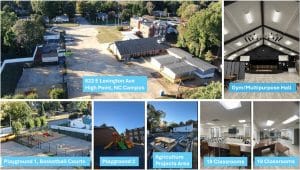
ALA runs multiple campuses across the DFW area, and the setup varies a bit by location. The Allen, Texas campus has ESA funding available, while the Frisco and North Carolina campuses have their own enrollment details and eligibility rules. It’s worth checking which campus is actually within a practical distance from your home before going further, the ALA locations page lists the address and contact details for each one.
Questions to Ask Before You Choose
Before committing to any school, public, private, or Islamic, ask these directly:
- Is the school accredited, and by which organization?
- What’s the actual student-to-teacher ratio, not the marketed one?
- How is religious or values-based instruction handled, if at all?
- What financial assistance or scholarship programs exist, and am I eligible?
- What does the admissions and enrollment timeline look like?
- Can I visit a classroom during a normal school day before enrolling?
Asking these upfront saves you from finding out six months in that the school’s reality doesn’t match its brochure.
Why Families in DFW Choose American Leadership Academy
A lot of what makes a school choice “right” comes down to fit, but a few things consistently come up when DFW families explain why they picked ALA over other options. The Cognia accreditation means academic credits transfer and count toward college admissions the same way they would at any recognized school. Daily Quran and Arabic instruction is part of the regular schedule, not an after-school extra. And tuition costs are more manageable than most parents expect once Texas’s education savings account programs are factored in.
If cost is the main thing holding you back, it’s worth looking at the actual numbers before assuming Islamic school is out of reach. The tuition and benefits page lays out current tuition rates alongside the financial assistance options available to enrolled families, which often changes the math significantly compared to what people assume going in.
FAQ’s
1. Is there a public Islamic school in Dallas-Fort Worth?
1. Is there a public Islamic school in Dallas-Fort Worth?
2. Are there Islamic schools for kids in the Dallas area?
3. How do I find the best Islamic school near me in DFW?
4. Is there a Muslim high school near Dallas?
5. Do Islamic schools in DFW teach Quran and Arabic alongside regular subjects?
Tags: ALA, american leadership academy, DFW Area